BRIDGE
Structural reasoning, spatial systems, and iterative physical design
Project Overview
The design was organized around three conceptual qualities—Robotic, Immersive, and Stormy—which informed the geometry, lighting, and sequence of movement through the bridge.
Rigid structural elements were combined with contrasting lighting conditions to create a controlled progression between compressed, exposed, and sheltered spaces. This required coordinating form, structure, and user movement rather than treating them as separate design decisions.
Design Concept
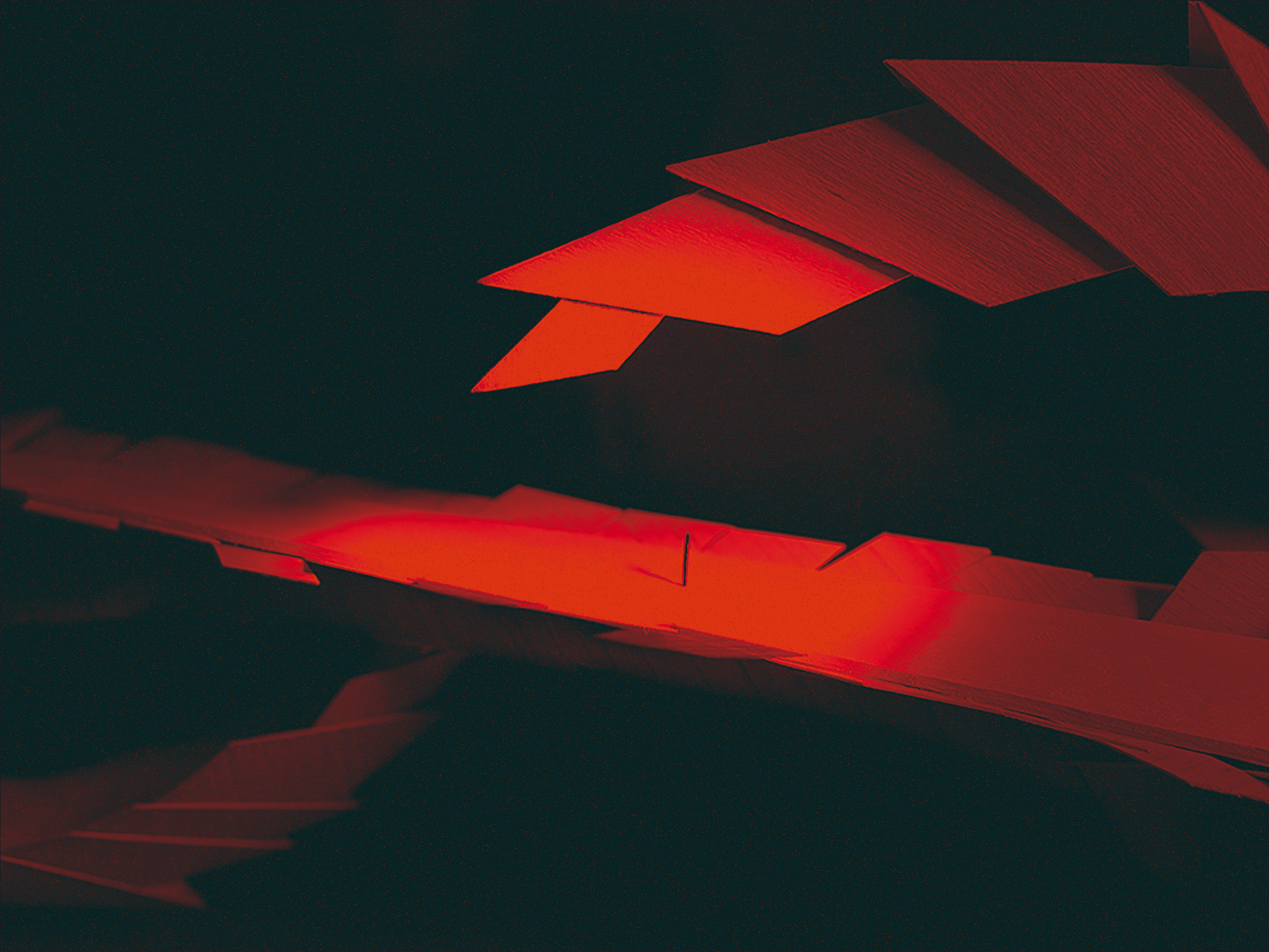
My concept centered on three defining words from the dystopian condition: Robotic, Immersive, and Stormy. These qualities guided every design decision, from the angular structural elements to the dramatic lighting effects that create stark contrasts between illuminated passages and shadowed spaces.
The bridge embodies tension between control and movement—rigid geometric forms are punctuated by dynamic lighting that suggests hope and possibility within a constrained urban environment. The red illumination serves as both warning and beacon, a narrative element that speaks to the emotional experience of crossing borders in uncertain times.
Project Meta
Skills
System & User Flow
The bridge creates a deliberate sequence of spatial experiences. Users enter through a compressed threshold, transition across an exposed central span with dramatic views to the river below, and arrive through a sheltered terminus. Strategic use of partial enclosure and structural shade elements modulates light quality and creates psychological waypoints along the crossing journey.
This project taught me that architecture is fundamentally about crafting human experience—every structural decision became an opportunity to shape how people feel as they move through space. The lighting study became a meditation on atmosphere, emotion, and the power of architecture to tell stories.
Key Learnings
This project strengthened my ability to translate abstract requirements into a structured design, evaluate relationships between components, and refine a solution through iteration. Thinking through structural behavior, spatial constraints, and user movement helped develop the systems-oriented problem-solving approach I now bring to Computer Information Systems and technical work.